7 Custom Beanie Design Mistakes to Avoid Before Going Into Production
Designing a custom beanie looks simple until you start translating a logo or graphic into an actual knitted product.
A design that looks perfect on a website, T-shirt, sticker, or business card may not work the same way once it has to be recreated with yarn. Knitwear has its own limitations, proportions, textures, and construction methods, and small design choices can have a big effect on the finished product.
The good news is that most custom beanie design problems are easy to avoid if you catch them before production begins.
Whether you are creating branded beanies for a company, ski resort, event, school, team, retail collection, or promotional campaign, these are seven of the most common mistakes to watch for before approving your final design.
1. Using Artwork That Is Too Detailed
One of the most common mistakes in custom knitwear is trying to reproduce artwork that is simply too complicated for the medium.
A detailed logo may look sharp on a computer screen because digital artwork can use extremely fine lines, small text, gradients, shadows, and subtle transitions. Knitting works differently. A jacquard design is created by combining individual stitches and yarn colors, which means there is a practical limit to how much detail can be reproduced clearly.
Tiny lettering, very thin outlines, intricate illustrations, and complicated shapes can lose definition once they are knitted.
That does not necessarily mean you need to redesign your logo. Often, a simplified version of the existing artwork is all that is needed. Removing unnecessary detail, increasing the thickness of certain lines, or using a secondary brand mark can create a much stronger result.
If your primary logo is particularly complex, consider whether a simpler icon, monogram, wordmark, or graphic element might work better on the beanie.
The goal is not to reproduce every detail exactly as it appears on a screen. The goal is to create something that still feels unmistakably like your brand once it becomes part of the knit.
2. Making the Logo Too Small
Small logos can work well on some products, but they can become difficult to read when knitted directly into a beanie.
This is especially important with text-heavy logos. If lettering is reduced too far, the spaces between characters can disappear and individual letters can begin to blend together.
The shape of the beanie also matters. A design may look large on a flat digital template but appear much smaller once the beanie is worn and stretched around someone’s head.
Before going into production, think about how the logo will look from a normal viewing distance. People will not be examining your beanie from six inches away. They will see it while someone is wearing it across a room, walking through a ski lodge, standing at an event, or passing them on the street.
A slightly larger and simpler design is often more recognizable than a small, highly detailed one.
This does not mean every beanie needs an oversized logo. Minimal branding can look great, but the artwork needs to be designed with the limitations of knit construction in mind.
3. Ignoring Color Contrast
Two colors can look very different on a screen and still blend together once they are knitted side by side.
Poor contrast is one of the easiest ways to make an otherwise strong design difficult to read.
For example, a dark blue logo on a black beanie may feel subtle and sophisticated in a digital mockup, but the actual knitted design may not have enough contrast to remain visible. Similar problems can happen with neighboring shades of gray, green, brown, or other closely related colors.
Contrast becomes especially important when a design contains text or thin graphic elements.
If visibility matters, choose yarn colors that create enough separation between the artwork and the background. That does not mean your design needs to be loud. Neutral and understated combinations can still work beautifully, but they need to be intentional.
At Fourbital Factory, customers can choose from more than 25 stock acrylic yarn colors, which provides plenty of room to create combinations that work with existing brand identities.
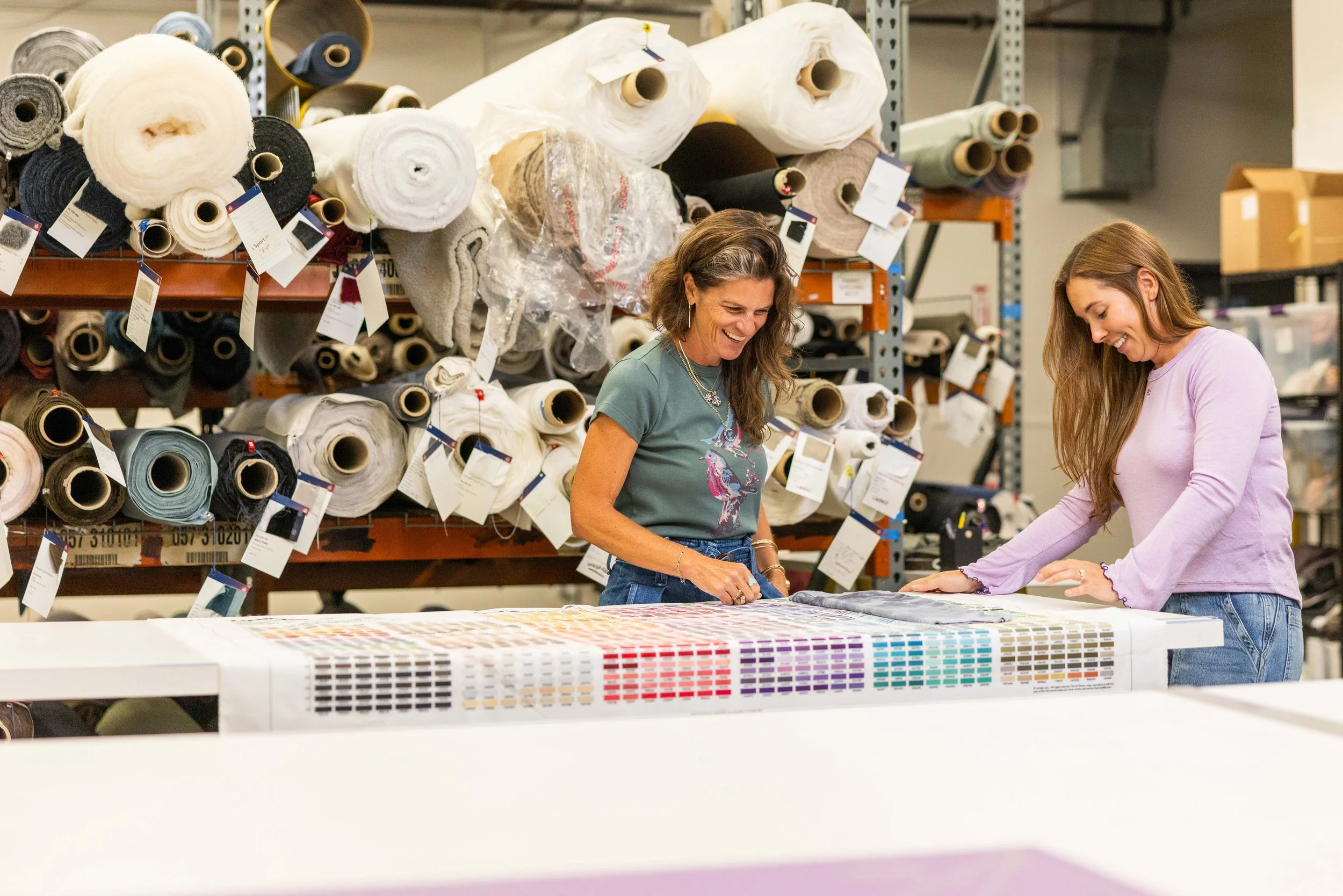
When possible, review the available yarn colors early in the design process instead of building the entire concept around colors that may not translate well into yarn.
4. Designing the Beanie Like a Flat Piece of Paper
A beanie is a three-dimensional object, not a poster.
Artwork placed on a flat template can look perfectly centered, only to feel slightly different once the beanie is stretched and worn.
You also need to consider the cuff, seams, crown, and overall construction of the hat. If a graphic is placed too low, part of it may disappear into the fold of the cuff. If it is too wide, important details may wrap too far around the sides of the head.
Repeating patterns need even more attention because the design has to flow around the circumference of the beanie.
This is one reason it helps to think about the entire hat rather than treating the logo as something that is simply dropped onto the front.
Ask how the design should interact with the cuff, whether it should repeat around the beanie, and where the most important elements should appear when the product is worn.
A good custom beanie design should look intentional from every angle.
5. Trying to Fit Too Much Branding Onto One Beanie
When companies realize how many customization options are available, there can be a temptation to use all of them at once.
A knitted logo, large woven label, pom-pom, secondary side label, multiple colors, and additional text can all work individually. Put too many of them together, however, and the beanie can quickly start to feel like promotional merchandise rather than something people actually want to wear.
In many cases, restraint makes branded headwear more effective.
Think about which element should be the primary focus. If you are using a bold jacquard pattern, you may only need a small woven label for additional branding. If the knit itself is simple, a larger patch or label may make more sense.
The best branded products usually strike a balance between being recognizable and being wearable.
This matters because the real value of a custom beanie comes when someone continues wearing it after the event, campaign, or season it was originally created for.
If the design feels like something they would choose to wear regardless of the branding, your logo gets considerably more exposure over time.
6. Choosing a Beanie Style Before Thinking About the Design
Another common mistake is selecting the construction first and forcing the artwork to fit it later.
Different beanie styles naturally work better with different types of branding.
A jacquard knit is ideal when the artwork itself should become part of the fabric. A ribbed knit can create a more minimal and textural appearance. A cuffed beanie offers a natural location for a woven label or patch, while a pom can add a more traditional winter or ski-inspired feel.
The right choice depends on the brand and the purpose of the project.
For example, a ski resort creating retail merchandise may want a bold knit pattern with a pom, while a design agency ordering employee gifts may prefer a minimal cuffed beanie with a small woven label.
Instead of asking which style looks best in isolation, think about what you are trying to communicate.
Who will wear the beanie? Where will they wear it? Is the goal retail merchandise, an employee gift, an event giveaway, or branded winter apparel? Do you want the branding to be obvious or understated?
Answering those questions first makes it much easier to choose the right construction.

7. Approving a Design Without Thinking About the Finished Product
Digital mockups are useful, but they should not be viewed in the same way as a finished photograph.
Yarn has texture. Knit stretches. Cuffs fold. Poms add volume. Different constructions change the proportions of the hat once it is worn.
That is why the final approval process should be about more than whether the logo is technically correct.
Look at the design as a complete product.
Does the color combination make sense? Is the branding large enough to read without overwhelming the hat? Does the design work with the cuff? Will the overall style appeal to the people who are actually going to receive or purchase it?
It is also worth considering how the beanie fits into the rest of your brand or merchandise collection. A design that looks good by itself may still feel out of place next to your jackets, hoodies, uniforms, packaging, or other branded materials.
Catching those issues before production is much easier than trying to fix them after the beanies have already been made.
Start With the Product, Not Just the Logo
The strongest custom beanies usually begin with a simple shift in thinking.
Instead of asking, “How do we put our logo on a beanie?” ask, “What kind of beanie would people actually want to wear?”
From there, the branding can become part of the product rather than something that feels added afterward.
That might mean simplifying your logo for a cleaner jacquard knit, choosing a more subtle woven label, adjusting your brand colors to create better contrast, or selecting a different beanie construction altogether.
Those decisions can make the difference between promotional merchandise that gets worn once and a beanie that stays in someone’s winter rotation for years.
Designing Custom Beanies With Fourbital Factory
Fourbital Factory produces custom knit beanies in Vermont for businesses, brands, ski resorts, schools, events, teams, and organizations across the country.
Because the beanies are manufactured in-house, the design and production process can be approached as one complete project rather than treating the artwork and finished product as separate steps.
Fourbital offers more than 25 stock acrylic yarn colors, multiple beanie lengths and constructions, woven and printed labels, pom options, and other customization choices. Minimum order quantities are typically around 25 to 50 pieces depending on the design, number of colors, and construction.
If you are not sure whether your artwork will translate well to knitwear, it is worth discussing the design before finalizing it.
A few small adjustments at the beginning can make a significant difference in how the finished beanie looks, feels, and represents your brand.
Planning a custom beanie project? Contact Fourbital Factory to discuss your artwork, colors, quantity, and design options before going into production.
Frequently Asked Questions
What type of logo works best on a custom knit beanie?
Simple logos with clear shapes, strong lines, and limited fine detail generally translate best to knitwear. Highly detailed artwork, very small text, thin lines, and gradients may need to be simplified before production.
Can a detailed logo be knitted into a beanie?
Some detailed logos can be adapted for jacquard knitting, but the amount of detail that can be reproduced depends on the artwork and the size of the design. Simplifying small elements or using an alternate version of the logo can often produce a cleaner result.
How many colors should a custom beanie design use?
There is no single ideal number, but simpler color combinations are often easier to read and can create a more wearable design. The right number of colors depends on the artwork, knit construction, and overall style of the beanie.
Should my logo be knitted into the beanie or added as a label?
Both can work well. Jacquard knitting allows the design to become part of the fabric itself, while woven labels and patches can provide a cleaner option for detailed logos or more understated branding. The right choice depends on the artwork and the look you want to achieve.
What file type should I provide for a custom beanie design?
Vector artwork is usually the most useful starting point because it can be resized and adjusted without losing quality. If you do not have a vector file, the manufacturer can help determine whether your existing artwork is suitable for production.
How do I choose colors for a custom beanie?
Start by comparing your brand colors with the available yarn options and make sure there is enough contrast between the background and the design. Fourbital Factory offers more than 25 stock acrylic yarn colors that can be combined to create a wide range of custom designs.
Can Fourbital help adjust my artwork for a knitted beanie?
Yes. If your existing logo or artwork is too detailed or needs to be adapted for knit construction, Fourbital can help determine what changes will produce a better finished result.