What Information Do You Need to Order Custom Beanies? A Buyer’s Checklist
Ordering custom beanies sounds straightforward until you actually have to place the order.
Someone asks how much 100 hats will cost, then the conversation turns to the style, the yarn, the logo, the colors, the deadline, the labels, and suddenly there are a dozen decisions to make. None of them are particularly complicated, but knowing what you need before you start can make the process much faster.
The good news is that you don't need a finished production plan before contacting a custom beanie manufacturer. You just need a general idea of what you're trying to make.
At Fourbital Factory, we work with brands, teams, retailers, events, and organizations to turn those early ideas into finished knitwear. Here's what you'll want to have ready when you're getting started.
1. How Many Beanies Do You Need?
Quantity is one of the first things a manufacturer will ask about because it affects pricing, production, and which customization options make sense.
Fourbital's minimum order quantity is generally 25 to 50 beanies, depending on the style and details of the project. A 30-unit order and a 500-unit order aren't necessarily handled the same way, so it's helpful to have at least a rough quantity in mind.
You don't need to know the exact number on your first email. If you're deciding between 50 and 100 units, say that. If you're testing a new design and think you'll need somewhere around 25 to 50, that's useful information too.
The important thing is to give your manufacturer enough information to recommend an appropriate production approach.
2. Which Beanie Style Do You Want?
The word "beanie" covers a surprisingly large range of fits.
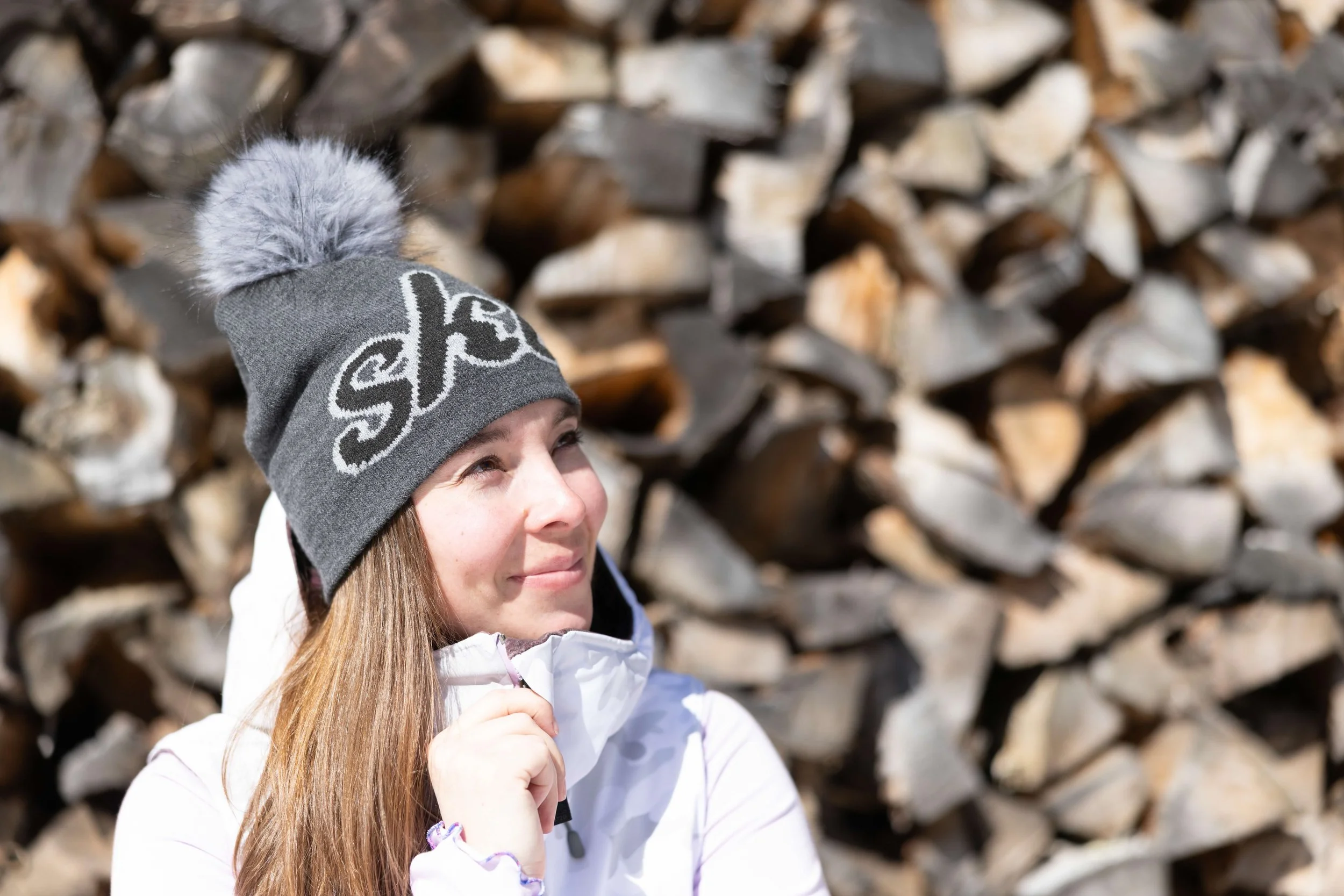
Fourbital offers several styles and length profiles, including skully, midi, cuffed, pom, ribbed, and jacquard beanies. Each creates a different look and works better for certain types of branding.
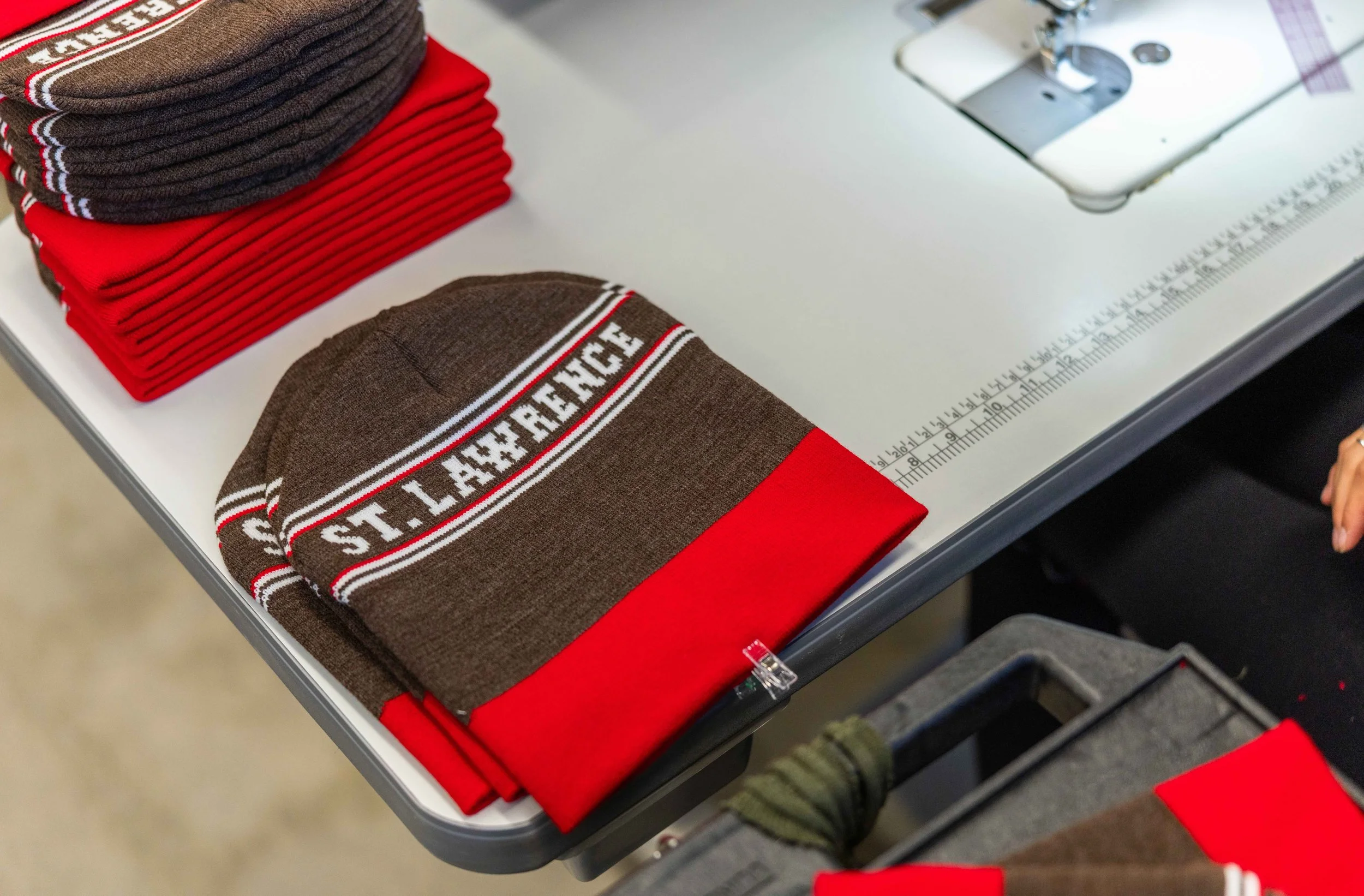
A skully has a shorter, closer fit and a low-profile appearance. A midi gives you a little more length while maintaining a clean, modern silhouette. Cuffed beanies provide additional ear coverage and a defined area for a woven label, making them a popular choice for brands and employee uniforms.
Then there are the design and construction choices. A jacquard beanie has the artwork knitted directly into the fabric, while a ribbed knit can provide a more traditional texture and work particularly well with labels or patches.
If you don't know which style is right, that's fine. It's much easier to make that decision once you know what you're trying to accomplish.
3. What Colors Are You Thinking About?
Color is worth considering early because it can affect both the overall design and the way your branding appears.
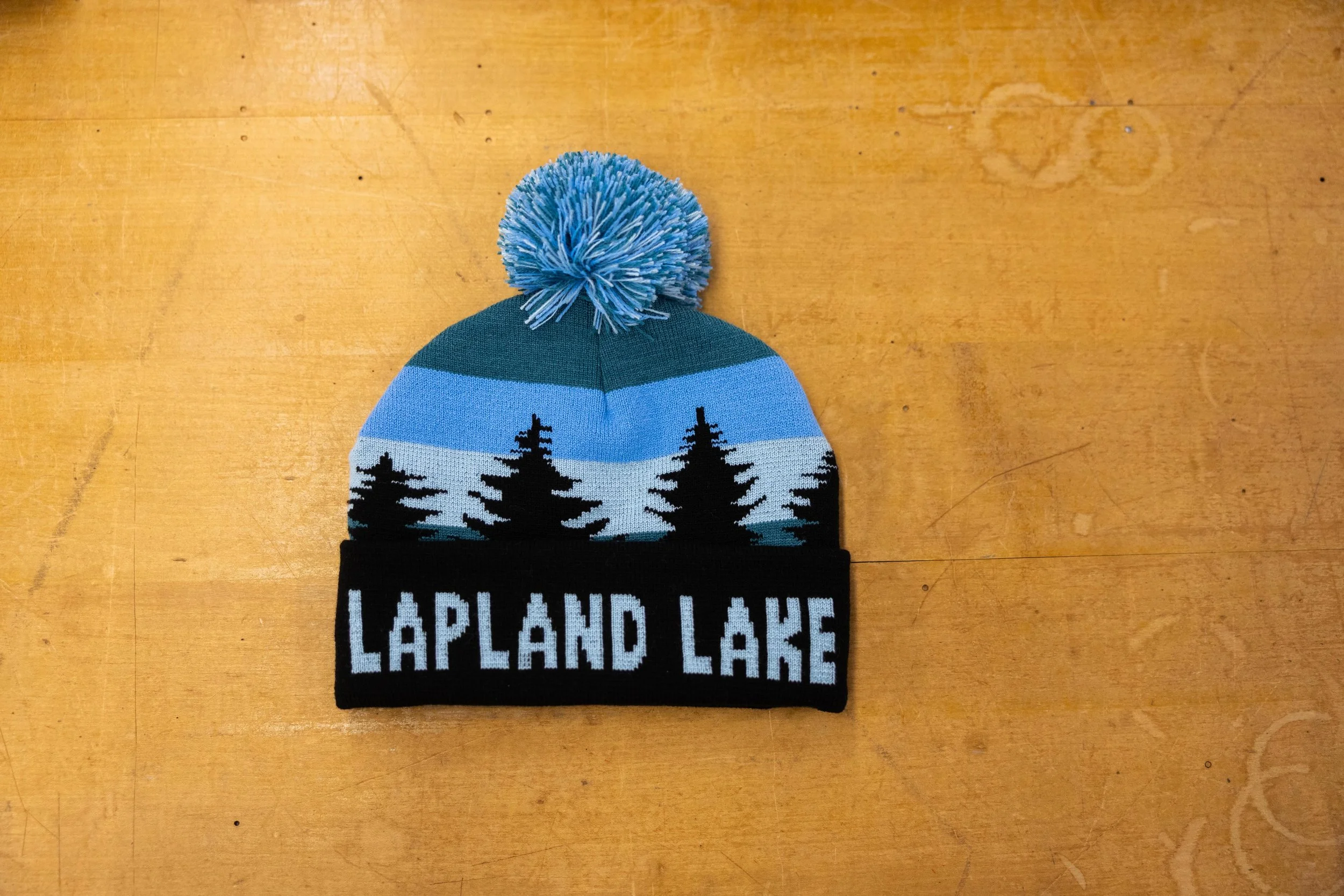
Fourbital stocks more than 25 premium acrylic yarn colors, so most projects can be built from existing yarn rather than requiring a custom dye. You can also mix and match up to four yarn colors in a design.
Think about whether you want the beanie to match your exact brand colors or whether it makes more sense to create something people will actually want to wear. A black or charcoal beanie with a small accent in your brand color may be more versatile than covering the entire hat in a bright corporate color.
If you're creating a jacquard design, color becomes even more important because the yarn itself is creating the graphic.
And if you don't have a palette in mind yet, bring your logo or brand guidelines. Your manufacturer can help you work through the options.
4. Do You Have Your Logo or Artwork Ready?
If you're adding a logo, graphic, text, or pattern to the beanie, you'll want to provide the artwork as early as possible.
Vector artwork is generally ideal because it gives the production team a clean version of the design to work from. Depending on the project, other high-resolution artwork can work too.
Don't panic if your artwork isn't production-ready.
A manufacturer should be able to tell you whether what you have will work and what needs to change. It's much better to send the artwork you have and ask than to spend hours trying to create a "perfect" production file without knowing what the manufacturer actually needs.
This is particularly important with jacquard beanies. A graphic that looks great on a screen may need to be simplified or adjusted when it's translated into knitted stitches. Still have questions? Check out our post on how to design a custom beanie for more.
5. How Do You Want Your Branding Applied?
Your logo doesn't necessarily have to be knitted directly into the beanie.
Depending on the style, Fourbital can offer options such as woven logo labels, satin labels, hem tags, custom care tags, branded hangtags, and jacquard knit designs.
Woven labels are a popular choice when you want a clean, retail-style appearance. Jacquard works well when the graphic itself should become part of the beanie. A hem tag can provide a smaller branding detail, while a hangtag can make the finished product feel more retail-ready.
You don't have to choose the branding method before reaching out. In fact, it often makes more sense to choose it after you've settled on the beanie style and artwork.
6. Do You Want a Pom?
This one is optional, but it's worth deciding early if you're considering a pom beanie.
Fourbital offers acrylic poms in small, medium, and large sizes, with the ability to customize them using up to eight yarn colors. There are also recycled faux fur poms in black or brown for a different look.
A pom can completely change the personality of a beanie. A small pom might keep things relatively understated, while a large or multicolored pom can make the hat feel much more playful.
If you're building merchandise for a ski resort, outdoor brand, team, or winter event, the pom can also become a recognizable part of the design rather than an afterthought
7. When Do You Need the Beanies?
People often ask: “What’s the turnaround time for a custom beanie?”. It’s not as long as you’d think, but please don't wait until the end of the process to mention your deadline.
If you're ordering for a holiday event on December 10, your manufacturer needs to know that before you start approving designs. If the beanies are for a fall product launch, that's useful information even if the exact launch date isn't finalized.
Fourbital's typical production timeline is 4–6 weeks from final design approval, with rush options potentially available depending on the project.
That distinction is important. The clock doesn't necessarily start when you send the first email. There can be time involved in discussing the project, developing artwork, reviewing samples, and approving the final design before production begins.
The earlier you share your deadline, the easier it is to build a realistic schedule.
8. What's Your Budget?
You don't necessarily need a hard budget, but having a general range can save time.
Custom beanie pricing depends on several variables, including quantity, style, yarn, number of colors, branding method, and additional finishing details. A simple 100-unit order won't have the same production cost as a highly customized jacquard design with multiple colors, custom labels, and retail packaging.
A budget also helps your manufacturer make better recommendations.
If you're trying to stay around a particular price per unit, say so. There may be several ways to get the look you want without paying for details that don't actually matter to you.
9. Where Are the Beanies Going?
Shipping information usually comes later, but knowing where the finished order needs to go is still useful when planning a project.
A local Vermont business picking up a small order has different logistics from a national retailer distributing several hundred beanies across multiple locations.
It also helps to distinguish between your production deadline and your arrival deadline. If the beanies need to be in your warehouse by October 1, that's more useful than simply saying you need them in October.
Give yourself some breathing room whenever possible. A product that arrives two days before an important event leaves very little room for error.
What If You Don't Know All of This Yet?
This is probably the most important part of the checklist. You don't need to have every decision made before you contact Fourbital. If all you know is that you want 100 custom beanies for your brand, you have a logo, and you'd like them ready by November, that's enough to start a conversation.
Bring whatever you have. A logo file. A photograph of a beanie you like. A screenshot from another brand. A rough sketch. Your website. Your brand colors. Even a sentence describing what you're going for.
Those references can be surprisingly helpful.
The job of a custom manufacturer isn't simply to take an order that's already been figured out. It's also to help you make the decisions that turn an idea into something that can actually be produced.
A Simple Checklist Before You Reach Out
If you're preparing to order custom beanies, having these details available will make the process easier:
Quantity: How many beanies do you need?
Style: Skully, midi, cuffed, pom, ribbed, jacquard, or another option?
Colors: Which yarn colors fit your brand or design?
Artwork: Do you have a logo, graphic, text, or pattern ready?
Branding: Woven label, jacquard, hem tag, patch, or another option?
Pom: Do you want one, and if so, what size or material?
Deadline: When do you need the finished order?
Budget: Do you have a target cost per unit?
Shipping: Where will the finished beanies be delivered?
You can start with that list and still leave plenty of room for the design to evolve.
The best custom beanie projects rarely begin with someone knowing exactly what they want. They begin with a good idea, a rough deadline, and enough information to start a useful conversation.
If you're ready to start planning yours, fill out Fourbital Factory's custom beanie project intake form and share what you have. The rest can be figured out from there.
Frequently Asked Questions About Ordering Custom Beanies
What information do I need to order custom beanies?
You'll generally want to provide your approximate quantity, preferred beanie style, colors, logo or artwork, preferred branding method, deadline, budget, and shipping information. You don't need to have every detail finalized before contacting Fourbital.
What is the minimum order for custom beanies?
Fourbital's minimum order quantity is typically 25–50 units, depending on the beanie style and customization details. Smaller runs can be a practical way to test a new design before committing to a larger production order.
What file should I provide for a custom beanie logo?
Vector files such as AI, EPS, or SVG are generally ideal for production. A high-resolution PNG can also be useful. If you don't have the original artwork files, Fourbital can help determine what is possible with the files you have.
How many colors can I use on a custom beanie?
Fourbital stocks more than 25 premium acrylic yarn colors, and designs can use up to four yarn colors. Acrylic pom designs can use up to eight yarn colors.
How long does it take to make custom beanies?
Most Fourbital projects ship within approximately 4–6 weeks after final design approval. The exact timeline depends on the style, quantity, customization, and production requirements. Rush options may also be available.
Do I need to know which beanie style I want before ordering?
No. If you're unsure whether a cuffed, midi, skully, jacquard, ribbed, or pom style is right for your project, Fourbital can help you choose based on your intended use, branding, budget, and desired fit.
Can I see a sample before placing a larger order?
Yes. Samples can be useful when you're deciding between styles, colors, branding methods, or finishing details. They allow you to evaluate the actual fit and appearance before moving forward with a larger production run.