What Makes a Beanie Feel Premium?
A premium beanie doesn't need a giant logo, an expensive hangtag, or some clever marketing story to feel expensive. Usually, you know within a few seconds.
You pick it up and notice the weight. You run your hand over the knit and feel whether it's soft or scratchy. You stretch the cuff and see whether it snaps back into shape. Put it on, and the fit tells you even more. A good beanie sits comfortably without feeling tight, covers what it needs to cover, and still looks like itself after you've taken it off.
Those details are easy to overlook when you're ordering custom merchandise because they're harder to put into a spreadsheet than the price per unit. But they're exactly what separates a beanie people wear for years from one that gets tossed into a drawer after the event where it was handed out.
It Starts With the Yarn
The yarn is probably the biggest factor in how a beanie feels in your hands and on your head.
Fourbital works primarily with premium acrylic yarn, which makes sense for custom knitwear that needs to handle regular use. Good acrylic can be remarkably soft, holds color well, and has the durability needed for a hat that might spend several winters getting stuffed into backpacks, ski bags, coat pockets, and glove compartments.
That matters because a beanie gets a lot more abuse than people realize. It gets pulled on and off with one hand. It gets tossed on a dashboard. It gets washed after a long day outside. It gets crammed into luggage on a January trip.
A quality yarn should come out of all of that looking like a piece of clothing, not a piece of promotional merchandise.
Knit Density Changes the Feel
Two beanies can use similar yarn and still feel completely different.
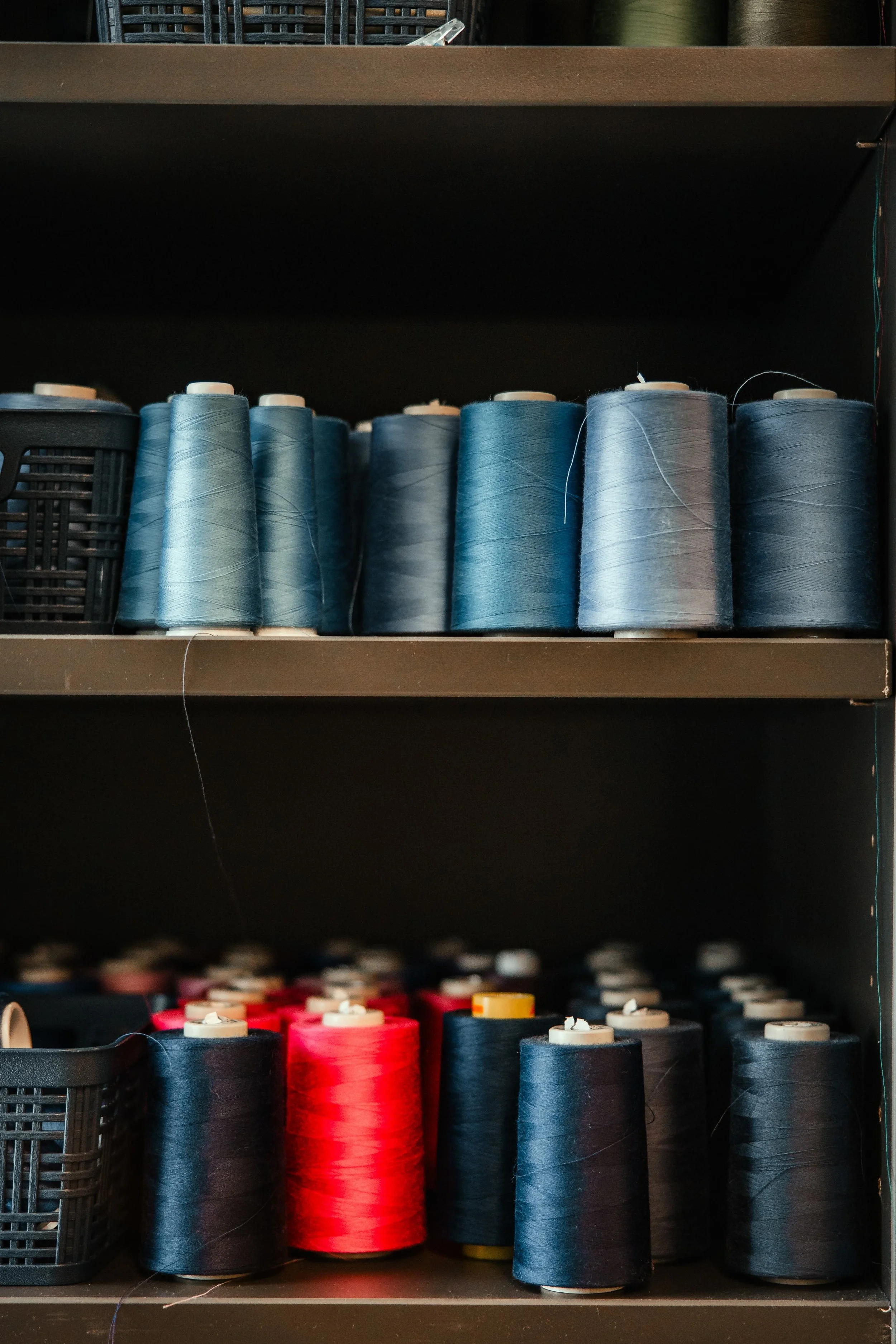
The difference often comes down to how the fabric is knitted. A dense, consistent knit has a substantial feel in your hands and tends to hold its shape well. A looser knit can feel lighter and more relaxed, which may be exactly right for a particular style, but it won't have the same structure.
This is one reason photographs don't tell the whole story when you're evaluating custom knitwear. A product shot can show you the color and the logo. It can't tell you whether the fabric feels substantial or whether the cuff will still have some spring after months of wear.
For a custom order, samples are valuable for exactly this reason. You should be able to evaluate the actual product before committing to a large run.
Fit Is Part of Quality
A premium beanie should feel comfortable before you start thinking about the fact that you're wearing it.
That's particularly important with custom merchandise because you're making something for a group of people who may have very different preferences. A skully sits close to the head with a shorter profile. A midi offers more depth and can create a little extra room at the top. A cuffed beanie gives you more structure and ear coverage, while a pom style adds another visual element without fundamentally changing the purpose of the hat.
There isn't one universally "premium" silhouette. The right fit depends on what you're trying to make and who is going to wear it.
What does matter is consistency. If the beanie fits differently from one production run to the next, customers notice.
The Cuff Should Feel Like It Belongs There
The cuff gets more attention than almost any other part of a beanie because it's where the product meets your face.
A good cuff should fold cleanly, sit comfortably around the head, and maintain its shape. It shouldn't feel flimsy or stretch out immediately. It also shouldn't be so tight that someone takes the hat off after an hour because their forehead hurts.
That balance is especially important when you're adding a woven label or other branding to the cuff. The label should look integrated into the design rather than stuck onto an otherwise ordinary hat.
Small finishing decisions can make a surprisingly large difference.
Branding Shouldn't Ruin the Beanie
There's a strange tendency in promotional merchandise to assume that more branding equals more value.
It doesn't.
A beanie with a six-inch logo across the front might technically give your company plenty of visibility, but that doesn't mean people will want to wear it. If the design feels more like an advertisement than clothing, you've created a product that has to be given away because nobody would choose it.
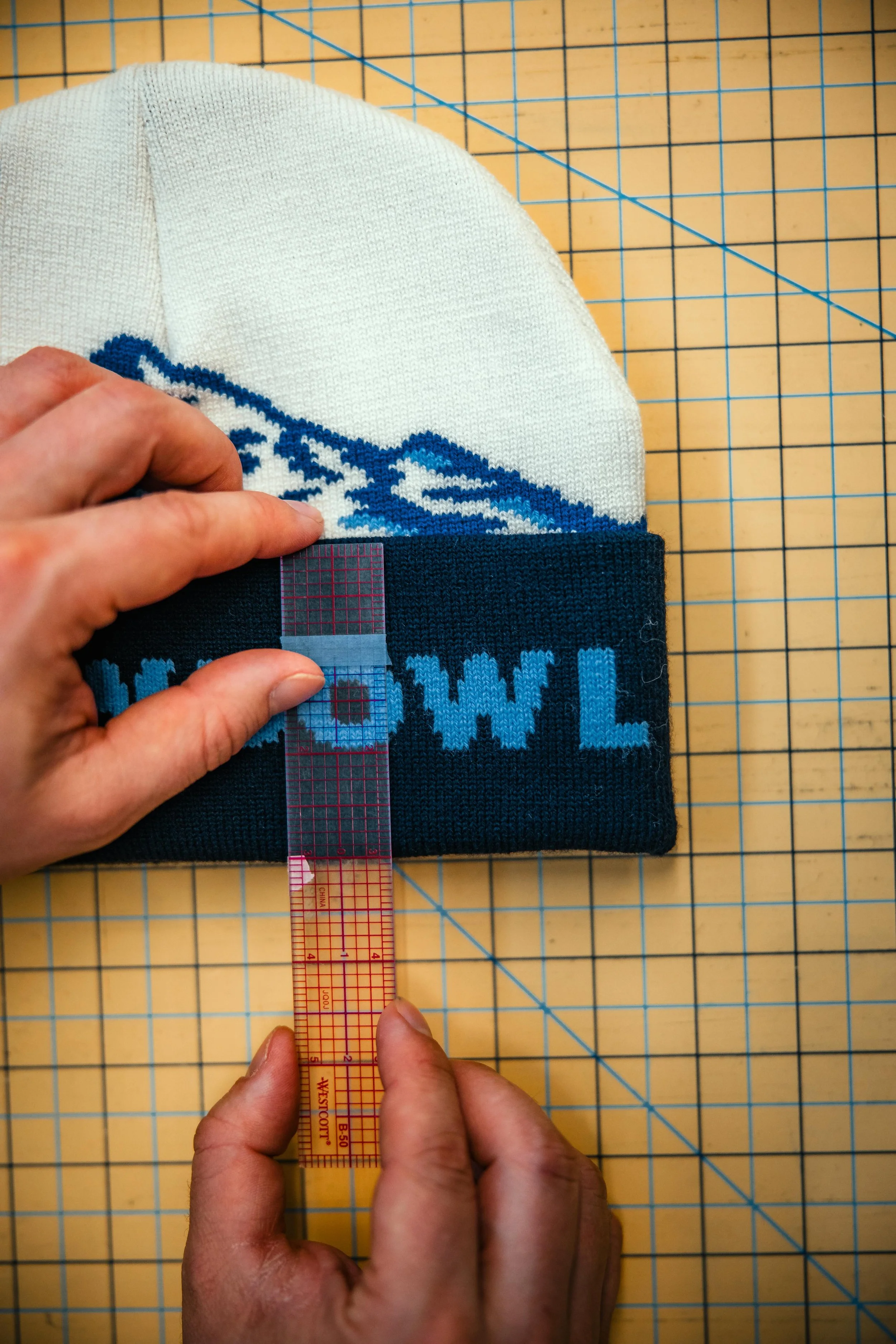
Woven labels are often a better solution for brands that want a more retail-oriented look. Jacquard knitting takes another approach, incorporating the artwork directly into the fabric. Both can feel considerably more refined than simply placing a large logo on the front.
The best custom beanies still look like good beanies when you cover up the branding.
Color Quality Matters, Too
Color is another detail people notice without necessarily realizing they're noticing it.
A premium beanie should have even, consistent color throughout the knit. That's particularly important when you're producing a large quantity for a brand, because small variations become obvious when dozens or hundreds of hats are displayed together.
The choice of color matters just as much. Fourbital offers more than 25 premium acrylic yarn colors, giving brands plenty of room to build something distinctive without having to settle for whatever happens to be available.
A good color palette can make a simple beanie look considered. A bad one can make an otherwise well-made hat feel like an afterthought.
Good Construction Is Quiet
You shouldn't have to inspect a premium beanie under a magnifying glass to figure out whether it was made well.
The knitting should be consistent. Seams should be clean. Labels should be securely attached. The finished hat should hold its shape and feel like the same product from one unit to the next.
That's particularly important for brands ordering custom merchandise because you're putting your name on every single piece.
If a customer receives a beanie with a loose thread or crooked label, they're not going to blame the production department. They see your logo and assume you approved it.
Quality control is therefore part of branding, whether you intended it to be or not.
Premium Doesn't Have to Mean Precious
There's also a misconception that a premium beanie needs to be delicate.
Quite the opposite.
A great winter beanie should be able to handle actual winter. It should survive being worn on a ski lift, stuffed into a coat pocket, washed at the end of the season, and pulled out again the following November without looking like it has been through a decade of hard labor.
Durability is part of the premium experience. Nobody is impressed by a beautiful beanie that falls apart after six weeks.
That's one reason material selection matters so much for brands. You're not simply choosing how the product feels on the day it arrives. You're choosing how it will represent your company six months, two years, or five winters from now.

The Details Add Up
The difference between an ordinary beanie and a premium one rarely comes down to a single feature.
It's the combination of the yarn, knit density, fit, finishing, color, construction, and branding. None of those decisions needs to scream for attention. In fact, the best ones usually don't.
You simply put the beanie on and think, "This is a good hat."
That's the standard worth chasing with custom merchandise.
Because if someone chooses your beanie on a cold morning when they have six other hats sitting by the door, you've made something that did more than carry your logo. You've made something they actually wanted to wear.
Frequently Asked Questions About Premium Beanies
What makes a beanie feel premium?
A premium beanie typically combines soft, durable yarn with consistent knit construction, a comfortable fit, quality finishing, and thoughtful branding. The overall product should feel substantial and comfortable without being unnecessarily heavy.
What is the best material for a premium custom beanie?
Premium acrylic is a popular choice for custom beanies because it can provide softness, durability, strong color retention, and reliable shape recovery. Fourbital also offers recycled yarn options for projects where sustainability is a priority.
Does the knit affect how premium a beanie feels?
Yes. Knit density and construction affect the weight, stretch, structure, and overall hand feel of a beanie. Consistent knitting is particularly important for maintaining quality across a larger custom order.
Are woven labels more premium than large logos?
For many brands, woven labels create a more refined, retail-oriented appearance. Part of what makes a great custom beanie design is allowing the branding to remain visible without overwhelming the design of the beanie.
How can I make a custom beanie look more expensive?
Start with a quality base beanie, then focus on the details. A considered color palette, comfortable fit, clean construction, and understated branding will generally create a more premium result than simply making the logo larger.
How long should a premium beanie last?
A well-made beanie can last for many years with proper care. Its lifespan depends on the materials, construction, frequency of use, and how it is washed and stored.