Private Label Beanies: How to Create a Beanie Under Your Own Brand
Launching a clothing brand no longer means you need to build your own factory, invest in knitting equipment, or place an enormous overseas order before you know whether a product will sell. Private label manufacturing allows brands to work with an established manufacturer to develop products that are made specifically for them and sold under their own name.
For beanies, that can mean much more than adding your logo to an existing blank hat.
A true private label beanie can be developed around your brand from the beginning, including the fit, yarn, colors, knit structure, artwork, labels, pom-poms, and finishing details. The finished product arrives ready to become part of your retail collection rather than looking like generic promotional merchandise.
Whether you're launching an apparel company, adding headwear to an existing product line, developing merchandise for an outdoor brand, or testing your first physical product, here's what you should know about creating private label beanies.
What Is a Private Label Beanie?
A private label beanie is manufactured by a third-party factory but sold under your own brand.
Instead of purchasing an existing retail product and reselling it, you work with the manufacturer to create a beanie that fits your brand identity. Depending on the manufacturer and production method, you may be able to customize everything from the yarn and fit to the labels and packaging.
This is an important distinction because the term "custom beanie" can describe several very different products.
Some companies purchase mass-produced blank beanies and add embroidery or a patch. That can be a perfectly good solution for company merchandise, events, or simple logo applications, but it isn't necessarily the same thing as developing a private label product.
Private label manufacturing gives you much more control over the actual beanie.
At Fourbital Factory, private label beanie manufacturing can include custom knit designs, branded labels, different materials, multiple fits, pom options, and other finishing details, with production taking place in Vermont.
Start With the Customer, Not the Logo
When you're developing a product for your own brand, one of the biggest mistakes is starting with the question, "Where should we put our logo?"
Start with the person who will actually wear the beanie instead.
Who is your customer? Where will they wear it? What other brands do they buy? Do they prefer technical outdoor products, minimalist streetwear, traditional ski styles, or something more fashion-focused?
Those decisions should influence the product before you start thinking about branding.
An outdoor company might prioritize warmth and merino wool. A streetwear brand might want a shorter fisherman-style silhouette with minimal labeling. A ski brand might build the entire product around a bold jacquard pattern and pom.
If the product itself makes sense for your customer, adding your branding becomes much easier.
This is especially important when the beanie will be sold rather than given away. Customers buying a product from your brand are judging the entire item — fit, material, color, construction, comfort, and design — not simply whether they recognize the logo.
Choose the Right Beanie Construction
Once you understand the product you're trying to create, the next step is choosing how the beanie itself should be constructed.
Different knit structures create very different finished products.
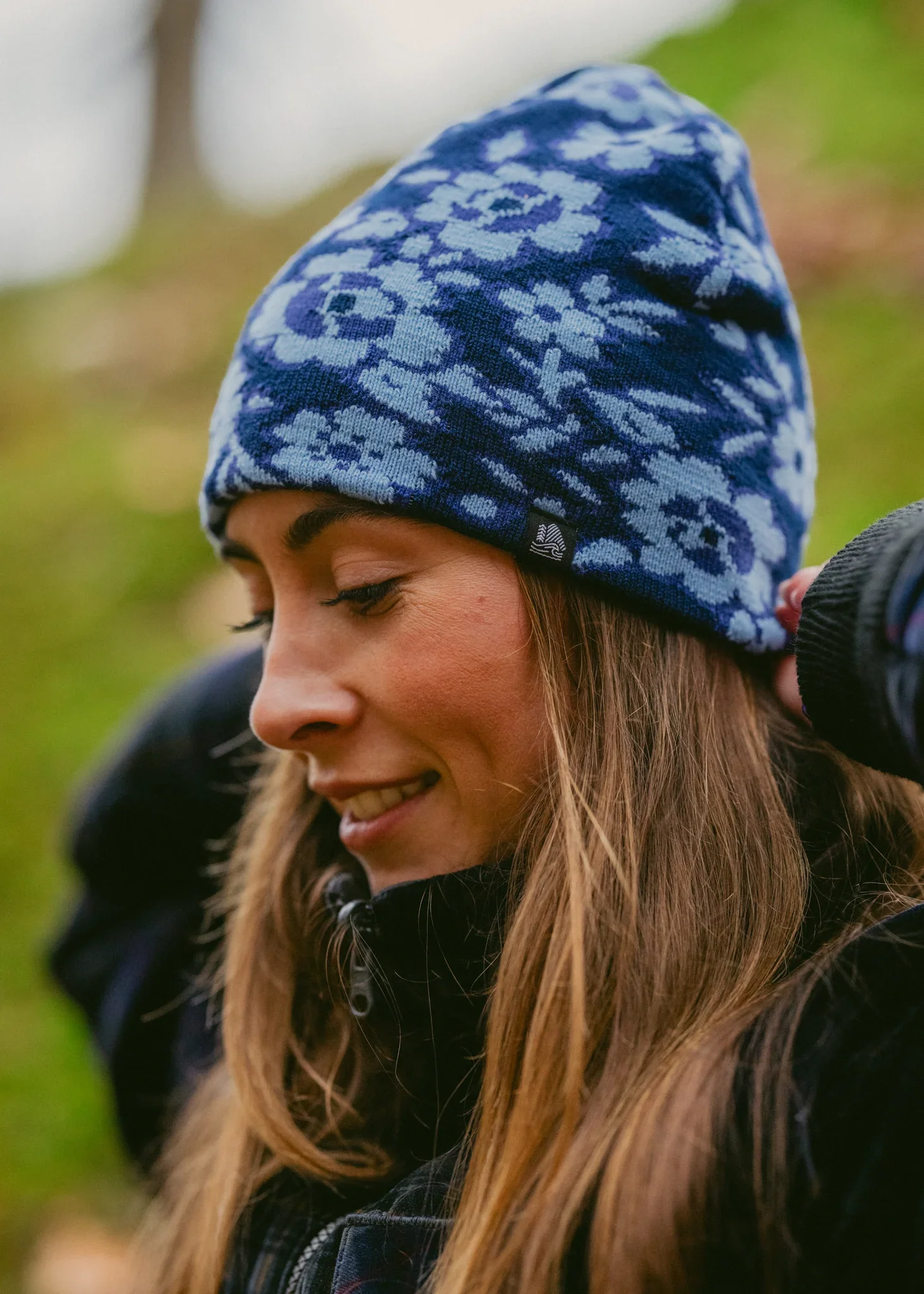
A ribbed knit provides texture, stretch, and a classic appearance that works especially well with woven labels, patches, or understated branding. Jacquard knitting allows artwork, text, patterns, and logos to be knitted directly into the fabric rather than applied afterward.
The fit matters too.
A shallow beanie creates a very different look from a longer cuffed style, even when both use the same yarn and colors. Your brand may also want to create several versions of the same design, such as a cuffed style alongside a shorter fit.
Fourbital currently offers ribbed and custom jacquard constructions along with multiple lengths and both acrylic and merino wool options.
If you're still deciding what type of construction makes sense, the Fourbital guide on how to design a custom beanie provides a useful overview of the different design decisions involved.
Decide Between Acrylic and Merino Wool
Material affects more than warmth. It changes how the product feels, how it should be cared for, how much it costs to produce, and how customers perceive it.
Premium acrylic is an extremely versatile option for private label beanies. It's durable, easy to care for, available in a wide range of colors, and works well for both simple and highly graphic designs.
Merino wool can make sense when you're creating a more premium product or building a collection around natural materials and outdoor performance. It offers excellent insulation and temperature regulation while giving the finished product a distinctly different feel.
Neither material is automatically better.
The right choice depends on your customer, retail price, intended use, and brand positioning.
If you're comparing the two, our guide to acrylic vs. wool beanies goes into greater detail about warmth, comfort, care, durability, and which material works best for different custom headwear projects.
Build Your Brand Into the Product
Once the foundation of the beanie is established, you can decide how visible you want the branding to be.
For some brands, the knit itself becomes the branding. A jacquard pattern might incorporate a logo, wordmark, slogan, or recognizable graphic throughout the beanie.
Other brands take a much quieter approach. A solid ribbed beanie with a small woven label can feel more like a traditional retail product while still being immediately identifiable to people who know the brand.
Options can include woven labels, hem tags, patches, care labels, branded hangtags, or artwork knitted directly into the product.
The key is not to use every available branding option simply because you can.
If you're selling the beanie to customers, design it like a product someone would choose to buy even if they had never heard of your company before. The branding should support the product rather than overwhelm it.
Our guide to custom beanie design explains several ways logos and other brand elements can be incorporated into knitwear.

Don't Forget the Inside of the Beanie
When brands develop their first product, most of the attention naturally goes to what customers can see from the outside.
Private label products also need to feel complete when someone picks them up, turns them over, or looks inside.
Depending on your project, that may mean adding a branded label, fiber-content information, care instructions, or other product details.
These elements may seem minor compared with the knit pattern or logo, but they play an important role in making a product feel professionally manufactured rather than simply decorated.
The same is true of hangtags and packaging if the beanie is going directly into a retail environment.
Think through the entire customer experience. What does someone see when the product is hanging in a store? What happens when they remove the tag? Does the inside of the product still clearly belong to your brand?
Fourbital's custom beanie buyer's checklist covers many of the branding details worth considering before production, including woven labels, care tags, hem tags, and hangtags.
Use Small-Batch Manufacturing to Test Your Idea
One of the biggest challenges for emerging brands is inventory.
Ordering too little can leave you sold out during an important launch. Ordering too much can tie up thousands of dollars in products that may take months or years to sell.
This is where small-batch manufacturing can be particularly valuable.
Instead of committing immediately to hundreds or thousands of units, a smaller first production run allows you to test the product with real customers.
You might learn that one color sells considerably faster than another. Customers may prefer the cuffed version to the shorter fit. A product you expected to be secondary could become your bestseller.
That information is far more useful than guessing.
Fourbital's current manufacturing program offers minimums as low as 25 units, although the exact minimum can vary based on the design and construction. You can read more about how those quantities work in our guide to minimum orders for custom beanies.
For a new brand, that flexibility can also make it possible to launch several designs or colorways without putting the entire inventory budget into one product.
Samples Are Especially Important for Retail Products
Digital mockups are useful for understanding layout and color placement, but a product that customers will actually pay for deserves a physical review whenever the project and order size allow it.
A sample lets you evaluate things that are difficult to judge on a screen.
How does the material feel? Is the beanie too long or too short? Does the cuff sit correctly? Is the logo the right size? Does the knit pattern look clear when the hat stretches? Do the colors work together in person?
This is also when you can evaluate the product as a customer would.
Put it on. Look at it from different angles. Compare it with other products in your collection. Hand it to someone who wasn't involved in the design process and ask what they think.
Fourbital can provide samples for qualifying orders before the full production run, helping brands evaluate the product before committing to the complete quantity.
Making a small adjustment at the sample stage is considerably easier than discovering the issue after an entire production run has been completed.
Consider Where Your Beanies Are Being Made
Manufacturing location can affect communication, lead times, inventory planning, and the story you tell customers about the finished product.
Many private label clothing brands automatically assume they need to manufacture overseas, particularly when they're accustomed to large minimum order quantities in apparel production.
That isn't the only option.
Fourbital manufactures custom beanies in the USA, with knitting and production handled at its Vermont facility.
For smaller brands, domestic manufacturing can make communication more direct and allow products to be developed without navigating international freight and customs as part of every order.
"Made in Vermont" can also become part of the product story itself, particularly for outdoor, ski, lifestyle, and New England brands where domestic manufacturing aligns naturally with the brand's identity.
Think Beyond Your First Production Run
A good private label manufacturing relationship shouldn't end when your first shipment arrives.
If the product succeeds, you're going to need more of it.
That means it's worth thinking about repeatability from the beginning. Keep approved artwork, colors, labels, dimensions, and product specifications organized so future runs can remain consistent.
You may also want to build on the original product rather than reinventing it every season.
A successful black ribbed beanie could return in new colors. A jacquard pattern could be adapted for a collaboration. A winter bestseller could become the foundation for an annual collection.
As sales grow, your manufacturing partner should be able to grow with you.
Fourbital's private-label and manufacturing programs are designed for brands ranging from small product launches to recurring retail production.
What Should You Have Ready Before Contacting a Manufacturer?
You don't need a finished tech pack or completely finalized design before starting a conversation with a beanie manufacturer.
It does help to have a general idea of what you want to create.
Start with your approximate order quantity, target delivery date, preferred material, basic fit, brand colors, and any existing logo or artwork. If you have reference images showing the type of beanie you're imagining, those can be useful too.
Most importantly, explain how you intend to use the product.
A manufacturer can give much better guidance when they know whether you're creating a $30 retail beanie for an outdoor brand, a limited collaboration, your company's first apparel product, or a seasonal collection for an established store.
If you aren't sure what information to send, use our custom beanie ordering checklist before requesting a quote.
Create a Beanie That Actually Belongs to Your Brand
Private label manufacturing gives brands an opportunity to create something much more distinctive than a stock beanie with a logo added afterward.
The yarn, fit, construction, color, labels, artwork, and finishing details can all become part of the brand.
That doesn't mean the design needs to be complicated. In fact, some of the best private label products are remarkably simple. What matters is that every decision feels intentional and that the finished beanie makes sense alongside everything else your company produces.
Fourbital Factory works with apparel brands, outdoor companies, retailers, emerging businesses, and other organizations to manufacture private label beanies in Vermont. From small initial runs to recurring production, the goal is to give brands a manufacturing partner they can continue working with as their product line grows.
If you're ready to develop your own product, start your private label beanie project with Fourbital Factory and tell us what you're looking to create.
Frequently Asked Questions
What is a private label beanie?
A private label beanie is manufactured by a third-party factory and sold under your company's brand. Depending on the manufacturer, you may be able to customize the yarn, colors, fit, knit design, labels, patches, pom-poms, and other finishing details rather than simply adding a logo to an existing blank beanie.
What is the difference between a private label beanie and a custom logo beanie?
A custom logo beanie may simply be an existing blank product with embroidery, a patch, or another form of decoration added to it. Private label manufacturing can involve developing the actual product around your brand, including its construction, fit, material, colors, labels, and design.
Can I start a beanie brand with a small order?
Yes. Small-batch manufacturing can allow new brands to test a product without committing to a large amount of inventory. Fourbital Factory offers minimums as low as 25 units for some projects, although the required quantity depends on the style and customization.
Can I put my own label inside a custom beanie?
Yes. Private label beanies can include branded labels and other finishing details. Depending on the project, options may include woven labels, hem tags, care labels, hangtags, patches, and knit-in branding.
Can a private label beanie have a completely custom design?
Yes. Jacquard knitting can incorporate patterns, text, logos, and other artwork directly into the knit, while ribbed styles can be customized with colors, labels, patches, and other details. The design may need to be adjusted to work within the physical structure of knitted stitches.
What materials can I use for a private label beanie?
Fourbital Factory currently offers acrylic and merino wool options. Acrylic is versatile, durable, easy to care for, and available in a wide range of colors, while merino wool offers a premium natural feel and strong cold-weather performance.
Where does Fourbital Factory manufacture its private label beanies?
Fourbital Factory manufactures its custom and private label beanies in Vermont, USA.
How long does private label beanie production take?
Production time depends on the design, quantity, customization, sampling requirements, and current manufacturing schedule. Fourbital Factory currently lists a typical turnaround of approximately four to six weeks for custom beanie production, although brands should confirm the timeline for their specific project before planning a launch.