Finding someone who can put your logo on a beanie is easy. Finding the right manufacturer to produce headwear for your clothing brand is a different challenge.
When you’re selling the finished product to customers, details that might be acceptable for a promotional giveaway suddenly matter much more. The fit needs to feel right. The yarn needs to match the quality of the rest of your collection. Colors should be consistent. Labels, stitching, and finishing need to look intentional. And if the product sells well, you need to know that your manufacturing partner can reproduce it.
That makes choosing a custom beanie manufacturer less about finding the lowest unit price and more about finding a company that understands what you’re trying to build.
Whether you’re launching your first apparel collection or adding headwear to an established brand, here are the most important things to consider before choosing a manufacturing partner.
1. Make Sure They Actually Manufacture the Beanies
Start with one of the most basic questions: Does the company actually make the beanies, or are they decorating products manufactured somewhere else?
There’s nothing inherently wrong with buying a blank beanie and adding embroidery. For some projects, it’s exactly the right solution. But if you’re looking for a manufacturer because you want control over the fit, yarn, color, knit pattern, labels, and overall construction, you need a company capable of producing the actual product.
A true custom knit manufacturer can develop the beanie around your specifications rather than asking you to choose from an existing catalog of finished hats.
This difference becomes particularly important for clothing brands. If you want a specific silhouette, a custom jacquard design, a particular rib structure, or your own combination of materials and finishing details, those decisions need to happen during manufacturing rather than after the hat has already been made.
If you’re still deciding which production model is right for you, understanding the difference between a decorated blank and a fully custom product is a good place to start. Fourbital's private label beanie manufacturing guide explains how brands can develop a beanie around their own identity rather than simply adding a logo to an existing product.
2. Look at the Manufacturer's Specialization
A factory that can make apparel is not necessarily a specialist in knit headwear.
Beanies require their own equipment, yarn knowledge, machine programming, pattern development, finishing techniques, and understanding of how knitted products stretch and fit when worn.
Look at the manufacturer's existing work. Do the beanies look like the type of product you want to sell? Do they offer several constructions and fits? Can they explain when jacquard makes sense versus ribbing, embroidery, patches, or woven labels?
A manufacturer that works with knit headwear every day should be able to help you solve design problems rather than simply reproduce whatever file you send them.
That expertise is especially useful if this is your brand's first beanie. You may have a clear visual direction without knowing the technical terminology required to manufacture it.
Fourbital's guide to designing a custom beanie provides an overview of how choices such as construction, fit, yarn, colors, and branding affect the finished product.

3. Ask About Minimum Order Quantities
Minimum order quantity, or MOQ, can have a major impact on which manufacturer makes sense for your brand.
Large overseas factories may offer attractive unit pricing but require hundreds of units per color or design. That can work for established brands with predictable sales, but it creates considerably more risk for a small company testing a new product.
If you have to order 500 beanies before you know whether customers want them, a significant portion of your inventory budget is tied up in a single SKU.
Smaller production runs give brands more flexibility. You can test a design, learn which colors sell, gather feedback on fit, and reorder based on real demand rather than forecasting everything months in advance.
Fourbital's custom beanie minimums typically fall around 25 to 50 units depending on the style and customization. That type of small-batch manufacturing can be particularly useful for limited drops, emerging apparel brands, collaborations, pop-ups, and new product testing.
When comparing manufacturers, don't just ask for the MOQ. Find out whether the minimum applies per design, per color, or across the entire order.
4. Evaluate the Level of Customization
"Custom" can mean very different things depending on the manufacturer.
For one supplier, customization may mean choosing a black or navy blank and uploading a logo for embroidery. Another manufacturer may allow you to specify the yarn, fit, length, knit structure, color combinations, jacquard artwork, pom, woven labels, embroidery, and packaging.
Neither model is necessarily wrong, but you should understand exactly what you're paying for.
For a clothing brand, customization can be especially valuable because the beanie needs to sit naturally beside the rest of your collection. If your apparel has a very specific aesthetic, a generic hat with your logo added afterward may feel disconnected from the rest of the line.
Ask potential manufacturers what can actually be changed. Can you adjust the length? Can they knit your artwork directly into the product? Can they create several colorways from the same design? Can you use your own labels? Can they add a custom pom or patch?
The more control you have over the product, the easier it is to create something that feels like it genuinely belongs to your brand.
5. Ask What Materials and Yarn Options Are Available
Material affects how the beanie feels, performs, photographs, wears over time, and ultimately how much customers believe it is worth.
If a manufacturer only offers one inexpensive acrylic yarn, that may limit what you can create. If your brand sells premium outdoor clothing, for example, you may want access to merino wool or other higher-end materials.
Color availability matters too. Ask how many yarn colors are stocked, whether there are limitations on the number of colors in a design, and how closely the available shades can match your brand palette.
Don't choose a material based on marketing language alone. Ask for actual samples when possible and evaluate the yarn yourself.
Touch it. Stretch it. Look at how it reflects light. Consider how it feels against the forehead. A beanie that photographs beautifully but feels uncomfortable isn't going to become a repeat seller.
6. Find Out How Much Design Support You'll Receive
Some brands come to a manufacturer with complete technical specifications and production-ready artwork. Others have a logo, a few reference images, and an idea.
A good manufacturing partner should be clear about how much help they provide between those two points.
Ask whether they can adapt artwork for knitting, recommend the right construction, advise you on logo sizing, or help translate a reference image into something that can actually be manufactured.
This becomes particularly important with jacquard designs. Artwork that works perfectly on a screen may contain gradients, tiny lettering, or fine lines that don't translate cleanly into knitted stitches.
An experienced manufacturer should identify those issues before the production run, not after it.
If you're preparing your first inquiry, Fourbital's custom beanie buyer's checklist explains what information and artwork are helpful to have ready before beginning a project.
7. Understand the Sampling and Approval Process
For a retail product, you should know what happens between approving a digital design and manufacturing the full order.
Ask whether physical samples are available and at what point in the process you can review them. Depending on the design, quantity, and manufacturer, sampling may add cost and time, but it can also prevent much more expensive mistakes.
A physical sample allows you to evaluate details that are difficult to judge from a digital mockup: fit, stretch, yarn feel, cuff depth, logo scale, color relationships, label placement, and overall proportions.
If you're ordering a significant quantity or introducing a product that will become part of your core collection, sampling becomes even more valuable.
You should also understand what approval actually means. Once you approve a sample or production specification, which elements are locked? What happens if you request a change afterward? Clear answers at the beginning make the production process much smoother.
8. Ask Where the Beanies Are Actually Made
Manufacturing location can affect lead times, communication, freight, minimums, quality control, and the story your brand can tell about the finished product.
Don't assume that a company with a U.S. office is producing its products domestically. Terms such as "designed in the USA" or "finished in the USA" don't necessarily mean the actual knitting happens here.
If domestic production matters to your brand, ask specifically where the product is knitted, sewn, embroidered, finished, and packaged.
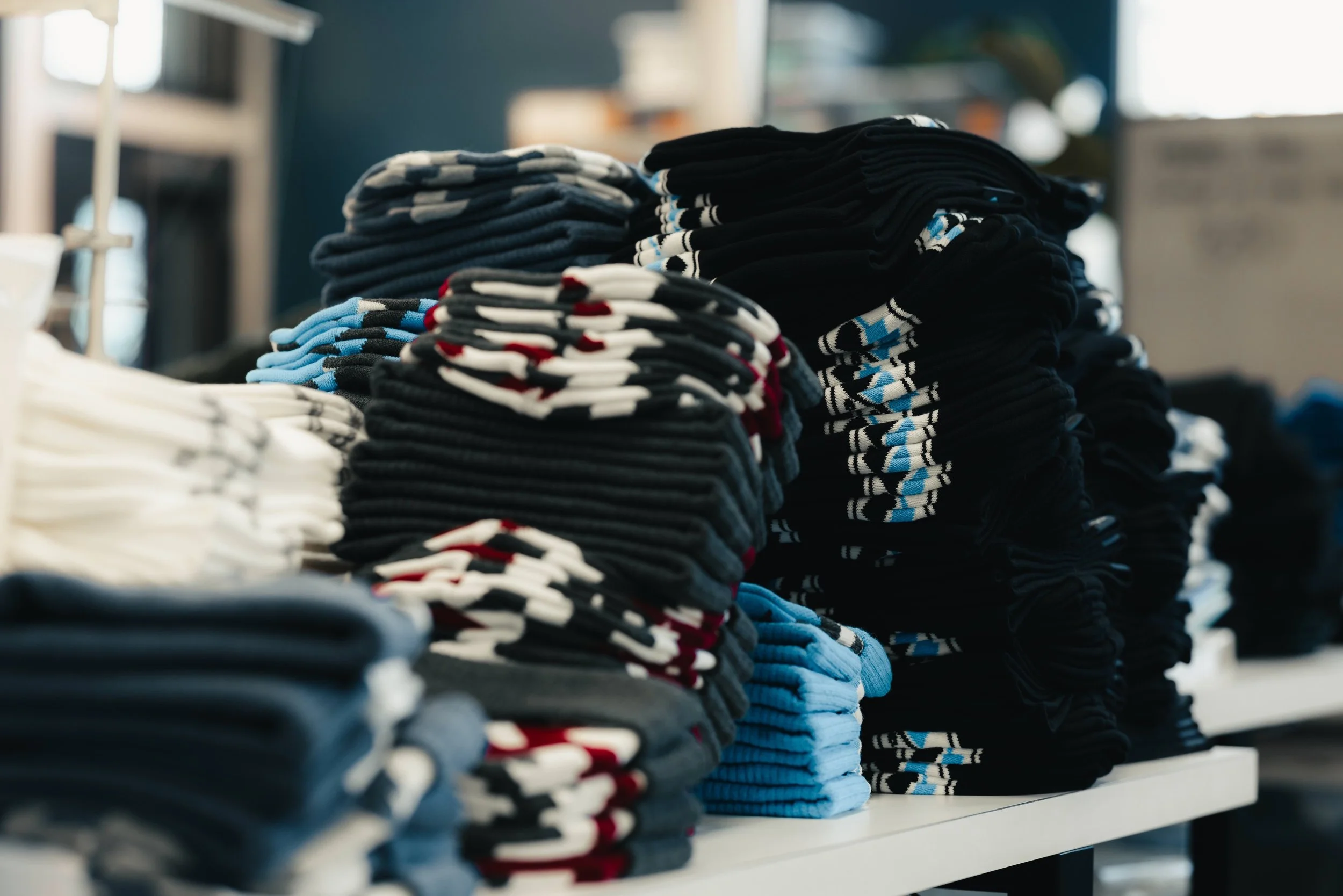
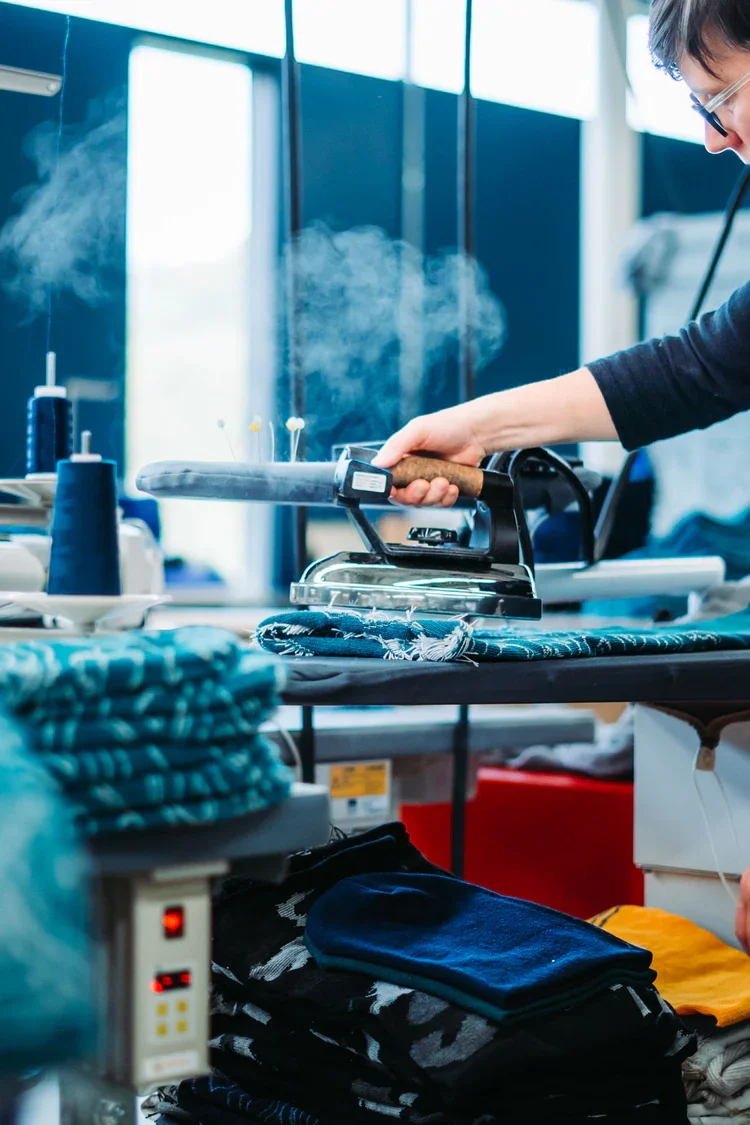
Fourbital manufactures its custom beanies in Vermont, where the knitting and finishing process can be handled directly by the production team.
For clothing brands, domestic manufacturing can also make smaller production runs and repeat orders easier to manage because you're not building every reorder around international freight and large overseas minimums.
9. Get a Realistic Production Timeline
A fast quote doesn't necessarily mean fast production.
Ask when the lead time starts. Is it calculated from your initial inquiry, from payment, from artwork approval, or from approval of a physical sample?
You also need to know whether the quoted timeframe includes finishing, packaging, and shipping.
Fourbital currently lists a typical production turnaround of approximately four to six weeks, although the exact timeline depends on the project. For any manufacturer, complicated designs, larger orders, sampling, and busy seasonal periods can affect scheduling.
If you're developing a product for a specific launch date, work backward from that date and leave yourself some breathing room.
A clothing launch is stressful enough without discovering that the product is scheduled to finish manufacturing two days before your campaign goes live.
10. Look Beyond the First Order
One of the most overlooked questions when choosing a manufacturer is what happens if the product succeeds.
Your first run may only be 50 beanies. Six months later, you may need 250. Eventually, you might want the same style in four colors or create a completely new collection around the original fit.
Ask how reorders work.
Does the manufacturer retain your approved design specifications? Can they reproduce the same yarn colors and fit? What happens if a yarn is discontinued? Can they scale production while maintaining consistency?
A good manufacturing relationship becomes more valuable over time because each successful project gives both sides a better understanding of the product.
For a clothing brand, that continuity can be much more valuable than constantly searching for the cheapest factory on each individual order.
11. Pay Attention to Communication
You can learn a lot about a manufacturer before placing an order simply by paying attention to how they communicate.
Do they answer your actual questions? Are they willing to tell you when something won't work? Do they explain limitations clearly? Can you reach a real person when a project changes?
Good manufacturing isn't just about equipment. It involves hundreds of small decisions, and unclear communication increases the chances that one of those decisions gets made incorrectly.
The best manufacturing partners should feel comfortable saying, "That logo is too detailed at that size," or, "We can make that, but this construction would produce a better result."
You want a partner who is invested in making a good product, not one who simply says yes to everything until the purchase order is signed.
Fourbital's article on questions to ask before ordering custom beanies provides a useful starting point for conversations with any potential manufacturer.
12. Don't Choose Based on Unit Price Alone
Price matters, particularly when you're developing a product that needs to hit a specific retail margin. But the lowest quote isn't necessarily the least expensive option once everything else is considered.
A lower unit price may come with higher minimums, longer lead times, expensive international freight, limited customization, or fewer opportunities to make changes.
There is also the cost of a product that simply doesn't sell.
If paying slightly more per unit allows you to order 50 pieces instead of 500, improve the fit, use better yarn, or create a product customers perceive as more valuable, the economics may look very different once the beanies reach your store.
Compare the complete manufacturing relationship rather than a single number on a quote.
Choosing the Right Manufacturing Partner
The right beanie manufacturer for your clothing brand isn't necessarily the biggest factory or the one offering the lowest price.
It's the company that can reliably make the product you want at a quantity, quality level, timeline, and price that makes sense for your business.
Before choosing a manufacturer, make sure you understand who is actually making the product, what you can customize, which materials are available, how sampling works, what the minimum order is, where production takes place, and how future reorders will be handled.
Most importantly, look for a partner that understands you're building a product customers will pay for, not simply putting a logo on promotional merchandise.
Fourbital Factory manufactures custom and private-label beanies in Vermont for apparel brands, outdoor companies, retailers, and businesses ranging from first-time product launches to established recurring programs. With small-batch production, custom knit options, and direct access to the manufacturing team, brands can develop headwear without committing to enormous overseas production runs.
If you're looking for a manufacturing partner for your next collection, contact Fourbital Factory to discuss your design, quantity, materials, and production goals.
Frequently Asked Questions
What should I look for in a custom beanie manufacturer?
Look at whether the company actually manufactures the beanies, its experience with knit headwear, minimum order quantities, customization options, available materials, sampling process, production location, turnaround times, quality control, and ability to handle repeat orders. Communication and design support are also important, particularly if you're developing your first custom product.
What is the difference between a beanie manufacturer and an embroidery company?
A beanie manufacturer can produce the actual knitted product, allowing control over elements such as yarn, fit, knit construction, color, and pattern. An embroidery or decoration company generally starts with an already manufactured blank beanie and adds a logo or other decoration afterward.
What is a good minimum order quantity for a clothing brand?
The ideal MOQ depends on your expected sales and inventory budget. For emerging brands, smaller runs can reduce risk by allowing you to test a product before committing to larger quantities. Fourbital Factory's minimums typically start around 25 to 50 units depending on the style and customization.
Should I request a sample before ordering custom beanies?
A sample can be particularly valuable when the beanie will be sold at retail or produced in a larger quantity. It allows you to evaluate fit, material, color, logo size, label placement, construction, and other details that may be difficult to judge accurately from a digital mockup.
Can a clothing brand create completely custom beanies?
Yes. Depending on the manufacturer, brands can customize elements including yarn, colors, fit, length, knit structure, jacquard patterns, embroidery, woven labels, patches, poms, and other finishing details.
Should my clothing brand manufacture beanies in the USA or overseas?
Both can be viable options. Overseas factories can offer very competitive pricing at large quantities, while domestic production may provide advantages such as lower minimums, more direct communication, easier repeat orders, and shorter supply chains. The right choice depends on your volume, budget, timeline, and brand priorities.
How long does custom beanie manufacturing take?
Production schedules vary by manufacturer and project. Fourbital Factory currently lists a typical turnaround of approximately four to six weeks, although sampling, design complexity, quantity, seasonality, and finishing requirements can affect the final schedule.
Where does Fourbital Factory manufacture its beanies?
Fourbital Factory designs and manufactures its custom beanies in Vermont, USA.